Fraud Blocker

Common misconceptions amongst new runners are that your focus needs to be around your lower limbs

Spoiler alert, your upper body needs a little love too.

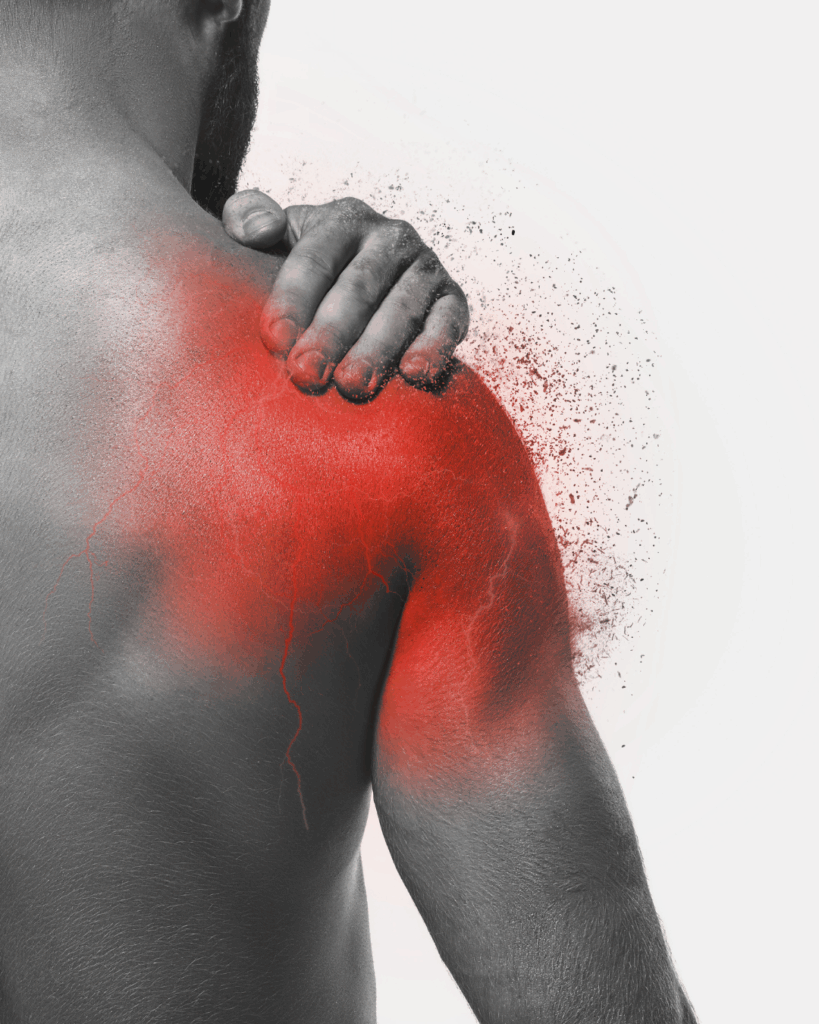
Common upper limb conditions we see in runners:

Literature and research around upper limb injuries in runners are scarce; however, relevant insights can be drawn from sports medicine and biomechanics research.

Agresta & Ward et al. (2018) studied what happens biomechanically when one arm is restrained during running.

Their findings were that running with one arm restrained increases frontal-plane knee and hip angles (which are associated with injury risk), changed foot-strike angle, decreased vertical centre-of-mass displacement, shortened stride length, and increased step frequency. We can draw from this that dysfunctional arm swing (e.g., due to shoulder weakness, pain, or mobility restriction), can indirectly increase injury risk in the lower body via altered kinematics while running.

Scapular dyskinesis (poor shoulder-blade control) can contribute to rotator cuff problems. Such dyskinesis could be relevant in running if shoulder control is poor, especially with fatigue or inefficient arm swing.

Poor scapular motion may lead to shoulder pathology, and by analogy, inefficient arm swing or poor shoulder mechanics in runners could contribute to overuse or pain in the upper limb.

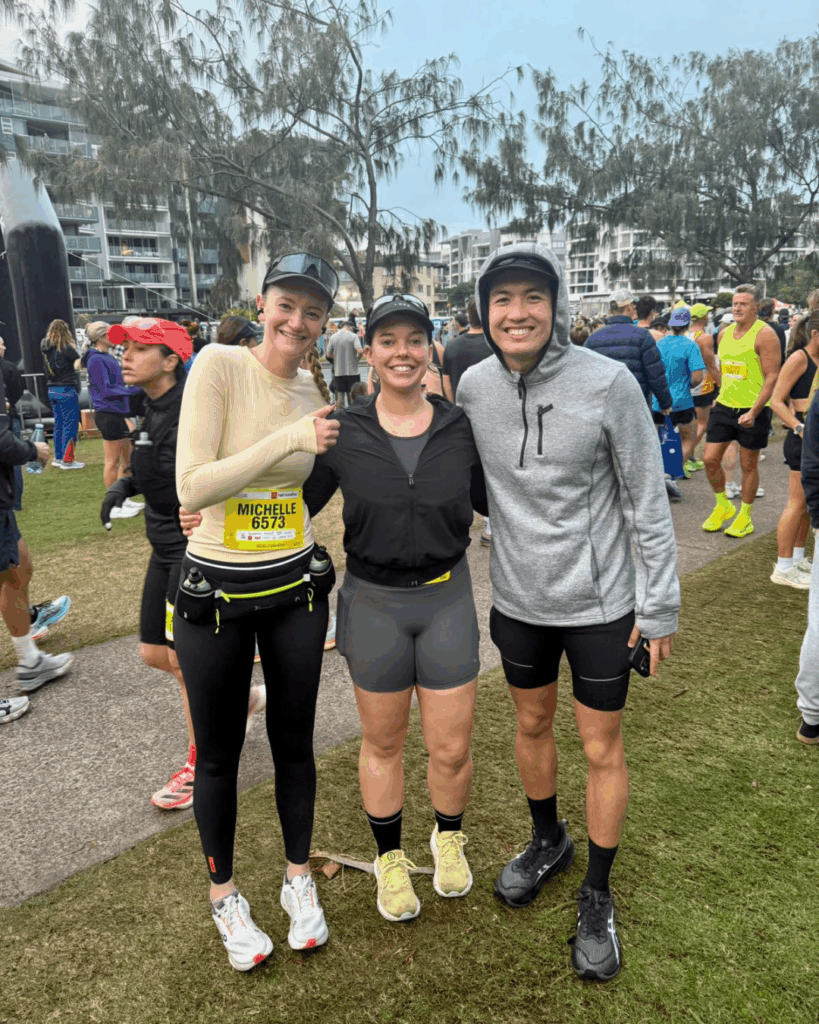
Three Action Rehab hand therapy runners posing at a marathon event, highlighting upper body awareness in running

Consider encouraging strength and motor control work: scapular stabilization, rotator cuff endurance, deltoid activation, to maintain healthy and functional arm swing while running.

Key concerns in runners may include rotator cuff pathology (or adaptation), altered shoulder mechanics, and compensatory muscle loading under fatigue or with injury.

So what can you do to avoid this?
Marathon running Action Rehab return to sport image

Do not skip your upper body during your warmup/stretching!

Upper limb flexibility and strength can improve your running performance (i.e. your stride rate).

Pre-Run Stretches

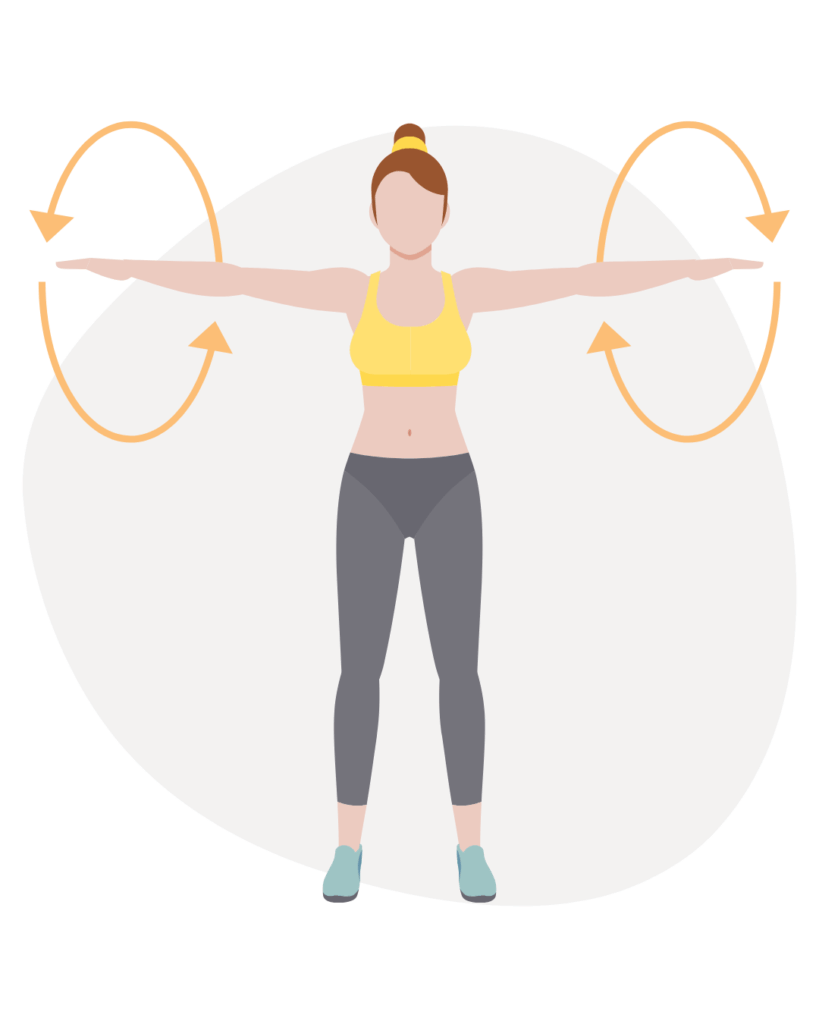
1. Arm circles:
  • Circular motion and forward and backward swing of the arms, engages the shoulder girdle and rotator cuff muscles.
  • Hold your arms out to the sides at shoulder level with palms facing the floor.
  • Begin by drawing tiny circles with your hands, letting the movement originate from the shoulder rather than the wrists or elbows.
  • Gradually widen the size of the circles over about 15 seconds. Then switch directions and repeat, again starting small and slowly building to larger circles for another 15 seconds.
Common misconceptions amongst new runners are that your focus needs to be around your lower limbs | Action Rehab Hand Therapy Clinic - Shoulder, Elbow, Wrist and Hand Physiotherapists
2. Scapular retraction:
  • Sit or stand tall with your spine in a neutral position and arms relaxed by your sides.
  • Gently draw your shoulder blades back and slightly down, as if you’re trying to bring them toward your spine without lifting your shoulders. Hold the end position briefly, keeping the chest open and the neck relaxed.
  • Avoid arching your lower back or shrugging your shoulders. The movement should come from the shoulder blades gliding along the rib cage.
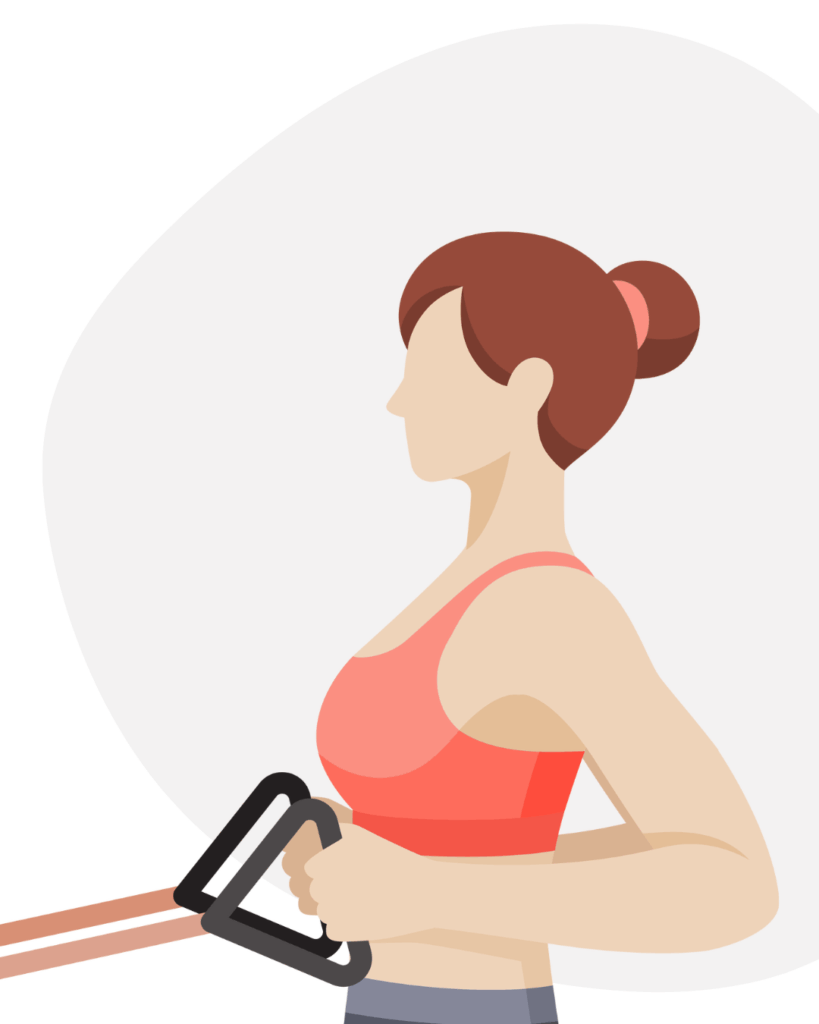
3. Light band-resisted rows:
  • Secure a light resistance band at chest height. Hold one end in each hand, arms extended forward, palms facing each other. Stand or sit tall with a neutral spine and soft knees.
  • Pull the band toward your ribcage by drawing your elbows back and keeping them close to your body. Squeeze your shoulder blades together at the end of the movement without shrugging.
  • Slowly return to the starting position, maintaining tension in the band. Keep your neck relaxed and avoid leaning backward or using momentum.
Common misconceptions amongst new runners are that your focus needs to be around your lower limbs | Action Rehab Hand Therapy Clinic - Shoulder, Elbow, Wrist and Hand Physiotherapists

Post Run Care

Recovery after a run is just as important as the pre run care.

1. Chest Opener:
  • Stand tall or kneel, hands clasped behind your back.
  • Gently straighten your arms and lift your hands away from your lower back, opening the chest and stretching the front shoulder/plexus area.
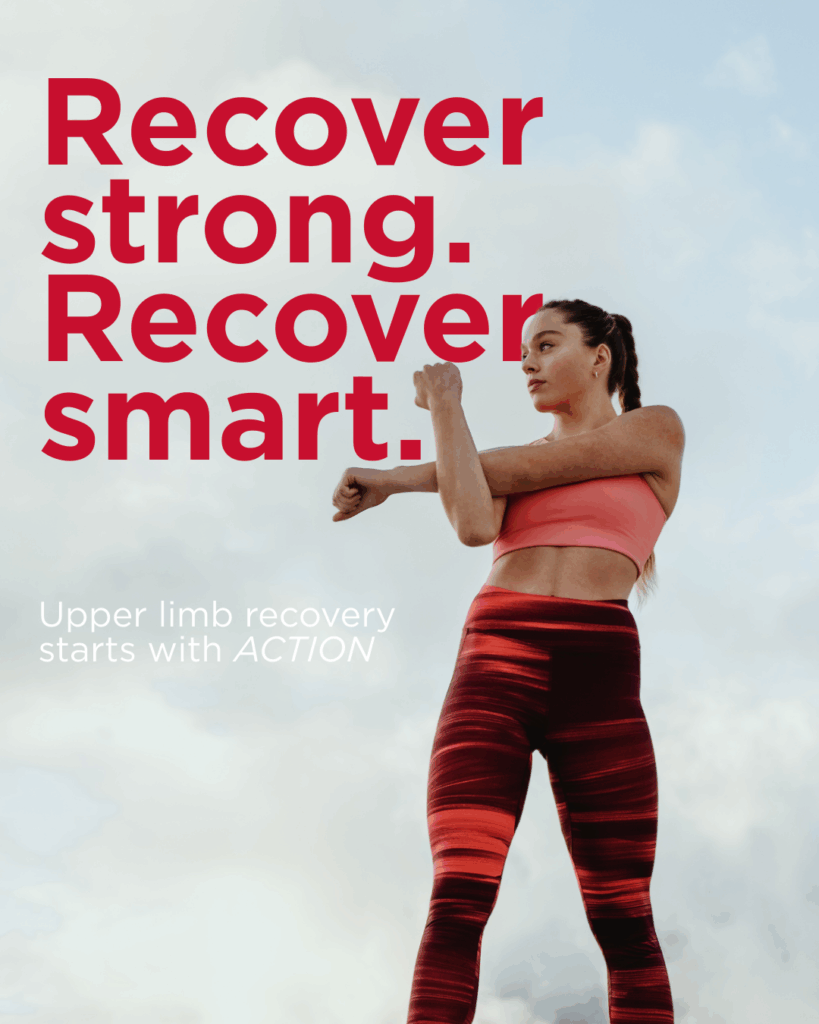
2. Shoulder Stretch (Arm Across Chest):
  • Stand or sit tall. Extend one arm straight across your chest.
  • Use the opposite hand to gently pull the extended arm closer to your chest, feeling a stretch across the posterior shoulder.
Pay attention to your posture:

Runners often hold extra tension in their shoulders, particularly during long or intense sessions. Make a conscious effort to relax your shoulders, let your arms hang naturally, and release any tightness in your hands after finishing your run.

Common misconceptions amongst new runners are that your focus needs to be around your lower limbs | Action Rehab Hand Therapy Clinic - Shoulder, Elbow, Wrist and Hand Physiotherapists

References

1.Arm swing / upper body biomechanics in running

Agresta, C., Ward, C. R., Wright, W. G., & Tucker, C. A. (2018). The effect of unilateral arm swing motion on lower extremity running mechanics associated with injury risk. Sports Biomechanics, 17(2), 206-215. https://doi.org/10.1080/14763141.2016.1269186

2.Scapular kinematics, shoulder stability, and fatigue
Chopp-Hurley, J. et al. (2020). Fatigue-induced scapular dyskinesis in healthy overhead athletes. Frontiers in Bioengineering and Biotechnology, 8, 302. https://doi.org/10.3389/fbioe.2020.00302

3.Ueberschär, O., & Kollegen. (2023). Relationship between longitudinal upper-body rotation and energy cost of running in junior elite long-distance runners. Sports, 11(10), 204. https://doi.org/10.3390/sports11100204 MDPI

Picture of Michelle Badenhorst

Michelle Badenhorst

Michelle Badenhorst is an occupational therapist specialising in hand and upper limb rehabilitation. With experience in trauma recovery and surgical rehab, she delivers holistic, evidence-based care tailored to each client’s goals. Michelle is passionate about helping people regain function and independence.
You’re in good company.

have a consultation with our senior therapistS

Claim your second opinion

URGENT CARE

If you’ve sustained a closed hand, wrist, elbow or shoulder injury, call us first or come straight in for urgent care.

Action Rehab Northside Hand & Upper Limb Clinic logo white

FIND A CLINIC NEAR YOU

At Action Rehab Hand Therapy Clinic, our Physiotherapists and Occupational Therapists are experienced in treating your upper limbs, including your thumbs, fingers, hands, wrist, elbows, and shoulders. Come and see our highly qualified and friendly staff today at a location convenient to you.