Fraud Blocker

Finger and Hand Lacerations: 5 Summer Salad-Making Mistakes That May Land You in Urgent Care

Summer is the perfect time for fresh salads, but it is also a surprisingly common season for finger and hand injuries

As a Hand Therapist, I’m all too familiar with seeing injuries that occur during food preparation, ranging from minor cuts to serious tendon and nerve damage requiring surgery.

Research from the Monash University Accident Research Centre found that the hand, fingers and wrist were the most frequently injured body sites among people presenting to hospital with unintentional cutting and piercing injuries sustained in the home.​ – Yikes!

So, to help keep your hands looking just as good as your salads…

Here are five common salad making mistakes to avoid this summer!

1. Don’t use a knife to remove an avocado pit

It pains me to admit as a Hand Therapist and someone who regularly preaches about safe tool use in the kitchen, that this first one comes from personal experience.

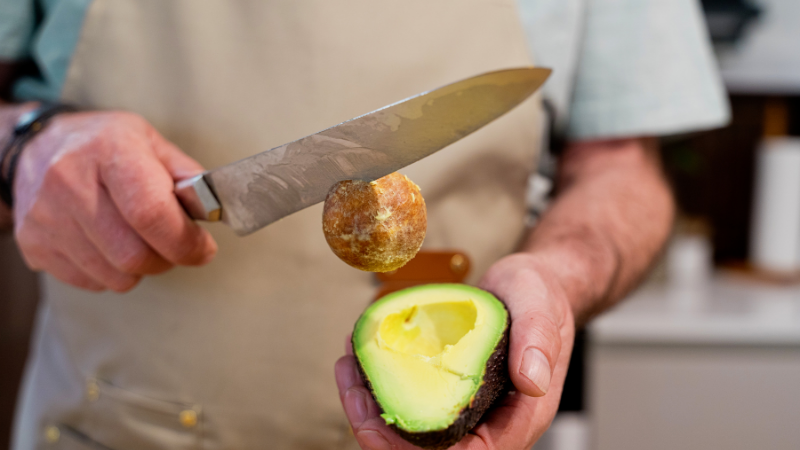
Kitchen knife being used to remove the pit from a halved avocado held in one hand.

Striking an avocado pit with a knife and twisting it out, I’ve learned, can be rather dangerous. Especially if you decide it’s a good idea to use the point of the knife rather than the blade. If the knife slips, it can easily puncture or slice the palm and fingers.

At best, this may result in a painful cut and at worst, it can lead to tendon or nerve damage and a trip to the Emergency Department.

Rather than following in my footsteps, consider:

  • Using your thumbs to press the pit out from the back in a ripe avocado
  • Scooping the pit out with a spoon
  • Cutting the avocado into quarters and removing the pit by hand
  • Using a purpose-built avocado tool
2. Not Protecting Your Fingertips When Slicing Vegetables
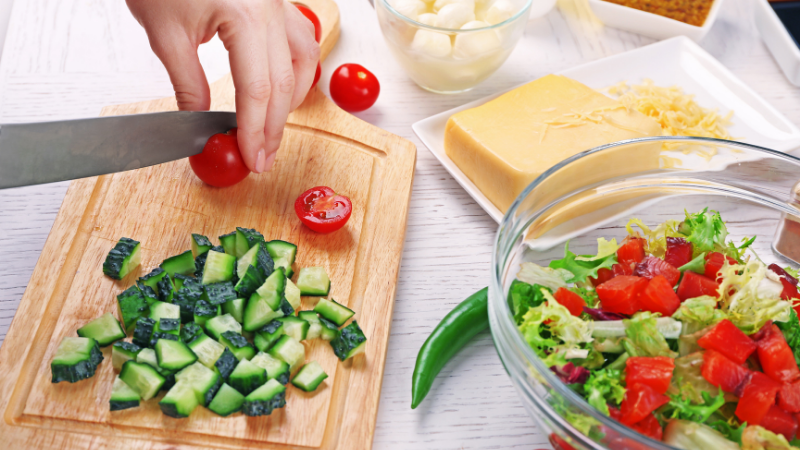
Hand cutting cherry tomatoes on a chopping board beside a salad bowl and chopped vegetables.

Finely slicing vegetables requires concentration and good technique. Round vegetables such as cucumbers, tomatoes and onions can easily roll while being cut, which can increase the risk of a wandering knife blade slicing a finger and not a vegetable.

One of my favourite simple but effective hacks is to cut my round vegetables in half first, to create a stable flat surface from which to continue slicing.

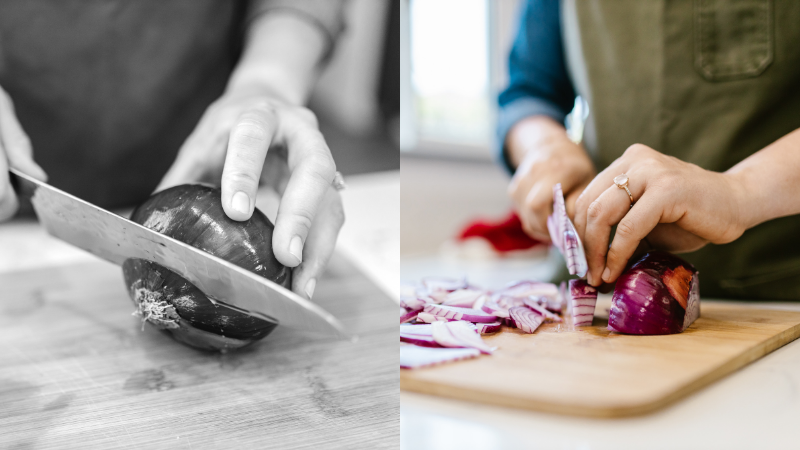
Person using the claw grip technique while slicing red onion on a wooden chopping board with a kitchen knife.

Another ‘handy’ tip is to use the “claw grip” technique, keeping your fingertips tucked in and your knuckles guiding the knife. I like to think of it kind of like making a cat paw – this will keep fingertips away from the knife’s edge.

For those who prepare large volumes of food, a mandolin slicer with a hand guard, an electric slicer, or an adaptive chopping board with food stabilisers can also be helpful.

3. Using a Slippery Chopping Board

A moving chopping board can quickly turn a simple meal prep task into a hand injury.

Before you start chopping:

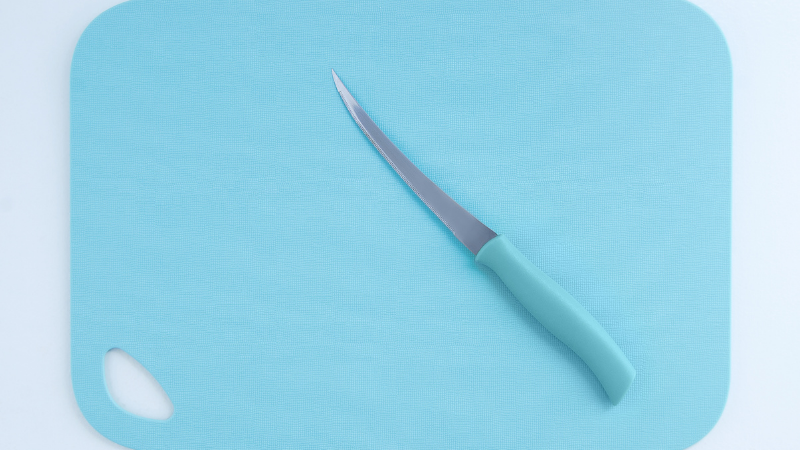
Kitchen knife resting on a blue chopping board on a preparation surface.
  • Ensure your board is placed on a stable surface
  • Place a damp paper towel or non-slip mat underneath the board
  • Replace warped or unstable boards

A secure chopping surface allows better knife control and significantly reduces the risk of accidental cuts!

4. Hiding Sharp Knives in Murky Sink Water

After food preparation, many people place knives into a sink filled with dishes, bubbles, and cloudy water. This is a common cause of hand lacerations because sharp blades are difficult to see.

Reaching into the sink without knowing where a knife is can result in deep cuts to the fingers, hand, or wrist. Add to that the contamination from potentially dirty sink water, and you may have an Urgent Care or Emergency Department situation best avoided.

Instead, consider washing your knives immediately after use and placing them out of the sink and separately from other dishes. This will keep the blade visible at all times.

5. Trying to Catch a Falling Knife

This last one seems obvious but, when natural reflexes take over, it can be easier said than done. Many serious hand injuries occur when people instinctively reach for a knife on its way to the floor. The safest response is simple: step back and let it fall.

A damaged floor tile is far easier to repair than a damaged tendon, nerve, or artery.

The Take-Home Message

Social media graphic showing a person cutting a cucumber with fingers extended near a knife blade. Visible text reads: "When the blog says 'protect your fingertips'... Don't be like Kendall. Use the claw grip. Save your fingers. Action Rehab Northside Hand & Upper Limb."

Most kitchen hand injuries are preventable.

A little extra attention to knife handling, cutting techniques and kitchen setup can significantly reduce your risk of ending up in urgent care instead of enjoying your salad.

So slow down, stay focused and priorities your safety in the kitchen because your hands are some of your most valuable tools and are worth protecting.

References

Clark B, Cassell E, Ashby K, Sherrard J. Unintentional Cutting and Piercing Injury in the Home. Hazard, Edition No. 52. Monash University Accident Research Centre, 2002. Available at: https://www.monash.edu/__data/assets/pdf_file/0005/218462/haz52.pdf (accessed September 2026). [monash.edu]


You’re in good company.

have a consultation with our senior therapistS

Claim your second opinion

URGENT CARE

If you’ve sustained a closed hand, wrist, elbow or shoulder injury, call us first or come straight in for urgent care.

Action Rehab Northside Hand & Upper Limb Clinic logo white

FIND A CLINIC NEAR YOU

At Action Rehab Hand Therapy Clinic, our Physiotherapists and Occupational Therapists are experienced in treating your upper limbs, including your thumbs, fingers, hands, wrist, elbows, and shoulders. Come and see our highly qualified and friendly staff today at a location convenient to you.