Fraud Blocker

Tendon Injury – Central Slip Injury – Boutonierre Deformity

Hand

WHAT IS A CENTRAL SLIP INJURY (Boutonierre Deformity)?

For our fingers to straighten, several tendons need to work together. These tendons run along the side and on the top of the finger. The tendon that runs along the top is called the central slip and attaches to the middle bone of the finger.

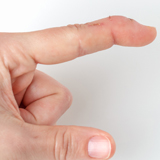
An injury to the central slip is usually caused when the finger is traumatically forced into a bend- for example being hit by a ball, or if the middle joint dislocates. An injury to your central slip tendon may result in a fixed flexion deformity which is an inability to fully straighten your finger, and puts you at risk of developing a deformity called a boutonniere.

What are some common signs or symptoms of a central slip injury?

Fixed flexion deformity
Forced flexion injury to the finger, or dislocation
Inability to straighten the finger
Pain and swelling around the middle joint of the finger
Flexion contracture or loss of movement

view the video text image

+

BOOK
CONSULTAION

Do I need any tests to confirm the diagnosis of a Central Slip Injury?

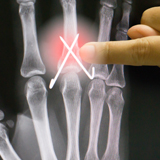
A central slip injury can be due to either a fracture at the base of the middle bone (avulsion) or from a tear in the fibres of the central slip itself (tendinous). You may need an x-ray to check if the bone is broken as well as the tendon being damaged. The therapists at Action Rehab Hand Therapy Clinic can organise an Xray referral for you. They will also assess your finger movement, swelling and pain in order to confirm the diagnosis.

HOW WILL HAND THERAPY HELP WITH MY CENTRAL SLIP INJURY?

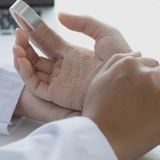
Following thorough assessment and discussion regarding the details of your injury, your therapist will custom fabricate a splint to keep the middle joint of your finger straight. This allows the tendon or fracture to heal in the optimal position, and is required for a period of up to 6-8 weeks. This timeline is determined by your therapist and based on a number of factors including the specifics of your injury, the timescales of your injury along with your individual functional needs and goals.

Once your tendon or fracture has been assessed as healed enough to safely move through range, your therapist will provide you with an exercises program and advise on how to successfully and safely ween from your splint. Ongoing discussion regarding your functional goals will allow your therapist to provide you with a range of motion and strengthening program specifically tailored to your needs.
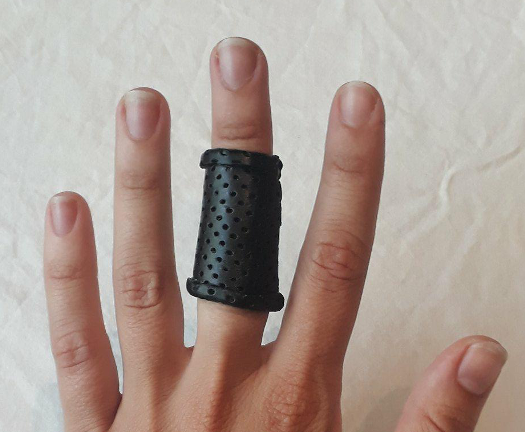
Central Slip Orthosis Splint | Action Rehab Hand Therapy Clinic
Tendon Injury - Central Slip Injury Treatment Melbourne | Action Rehab Hand Therapy Clinic

WHAT HAPPENS IF I DO NOT GET TREATMENT FOR MY CENTRAL SLIP INJURY?

If you do not get treatment for a central slip injury, the middle joint of the finger will not be able to straighten without help and may stiffen into a boutonniere position. This deformity is more difficult to fix and requires a much longer period of immobilisation in a splint in order to correct the imbalance of the soft tissues. A central slip injury will not heal optimally on its own.

HOW WILL TREATING MY CENTRAL SLIP INJURY IMPACT MY LIFE ON A DAY-TO-DAY BASIS?

Our custom-made splints are remold-able to ensure we get the most comfortable fit for you throughout the healing phase of your rehab. They are also removable, and your therapist will discuss with you when it is safe for you to be taking your splint on and off. We appreciate the need for our patients to be able to continue to engage in meaningful activities such as work and sport and therefore can provide thorough education on what activities are safe to engage in. We also provide custom-made guards and strategies to minimise your risk when returning to activities that require heavier use of your injured hand.

If you have any questions or believe you may be suffering from a central slip injury, our staff at Action Rehab Hand Therapy Clinic are available to assist in a variety of clinics across Brisbane.

Book OnlineCall 1300 76 2227

Meet Damon

Therapist

BOOK A SENIOR THERAPIST CONSULTATION

Damon, our therapist, will offer advice on any management strategies you may need. Please note, if you request ongoing care, you will only have to pay our current rates. We do not charge Worksafe and TAC clients for any consultations.

Call 1300 76227to book an appointment or Click Here to book.

Book OnlineCall 1300 76 2227

COMMON HAND CONDITIONS

A few of the more common conditions we diagnose and treat include:
Mallet Finger | Action Rehab Hand Therapy Clinic - Shoulder, Elbow, Wrist and Hand Physiotherapists

Sprained or
Fractured Fingers

Causes throbbing pain when moving the finger. Broken fingers may appear disfigured, swollen or out of alignment.
- How we treat it
Mallet Finger | Action Rehab Hand Therapy Clinic - Shoulder, Elbow, Wrist and Hand Physiotherapists

Metacarpal
Fractures

Shows as swelling and a loss of motion. Causes immediate pain when trying to form a fist. Fingers may also feel stiff, wonky and numb.
- How we treat it
Mallet Finger | Action Rehab Hand Therapy Clinic - Shoulder, Elbow, Wrist and Hand Physiotherapists

Thumb Arthritis -
Carpometacarpal Osteoarthritis

Can cause severe pain, swelling, and decreased strength and range of motion, making it difficult to do simple tasks like remove the lid of jar.
- How we treat it
Mallet Finger | Action Rehab Hand Therapy Clinic - Shoulder, Elbow, Wrist and Hand Physiotherapists

Finger
Arthritis

May make the fingers or hands look swollen or deformed. Often described as a stiffening, burning, stuck, swollen or aching sensation.
- How we treat it
Mallet Finger | Action Rehab Hand Therapy Clinic - Shoulder, Elbow, Wrist and Hand Physiotherapists

Finger Dislocation -
Volar Plate

A pop or a crack of the finger knuckles may quickly cause pain and loss of movement in the middle joint if the finger is bent back too far.
- How we treat it
Mallet Finger | Action Rehab Hand Therapy Clinic - Shoulder, Elbow, Wrist and Hand Physiotherapists

Trigger Finger -
Stenosing Tenosynovitis

Can cause stiffness in the morning, a clicking sound when moved or the finger locked in a bent position.
- How we treat it
Mallet Finger | Action Rehab Hand Therapy Clinic - Shoulder, Elbow, Wrist and Hand Physiotherapists

Mallet Finger
(Swan neck Deformity)

A droopy finger tip occasionally causes pain, swelling at the injured fingers furthest joint and an inability to extend the finger without assistance.
- How we treat it
Mallet Finger | Action Rehab Hand Therapy Clinic - Shoulder, Elbow, Wrist and Hand Physiotherapists

Central Slip Injury
(Boutonierre Deformity)

Can be sore around the back of the knuckle and difficult to straighten the finger from the middle knuckle with the finger sitting in a bent position.
- How we treat it
Mallet Finger | Action Rehab Hand Therapy Clinic - Shoulder, Elbow, Wrist and Hand Physiotherapists

Flexor Tendon Injury
Jersey Finger

Common sport or trauma injury can cause swelling, bruising and pain in the fingertip. The injured finger can’t bend at the tip towards the palm.
- How we treat it
Mallet Finger | Action Rehab Hand Therapy Clinic - Shoulder, Elbow, Wrist and Hand Physiotherapists

Skiers Thumb
Gamekeepers Thumb

Causes pain when moving the thumb to the side and squeezing. Can result in a loss of sensation and swelling along the thumb’s base. Common skiing and sports injury.
- How we treat it
Mallet Finger | Action Rehab Hand Therapy Clinic - Shoulder, Elbow, Wrist and Hand Physiotherapists

Collateral
ligament Injury

Can cause bruising, tenderness, and swelling around the base of your thumb, near the palm.
- How we treat it
Mallet Finger | Action Rehab Hand Therapy Clinic - Shoulder, Elbow, Wrist and Hand Physiotherapists

De Quervain’s
Tenosynovitis

Can cause pain, tenderness or swelling at the base of the thumb and numbness at the back of the thumb and index finger.
- How we treat it
location marker icon

LOCATIONS

We are conveniently located across Brisbane